

Dunmanway Board of Guardians
TitleDunmanway Board of Guardians
ReferenceIE 627/BG/83
Date
1840-1920
CreatorDunmanway Board of Guardians
Production date 1840 - 1920
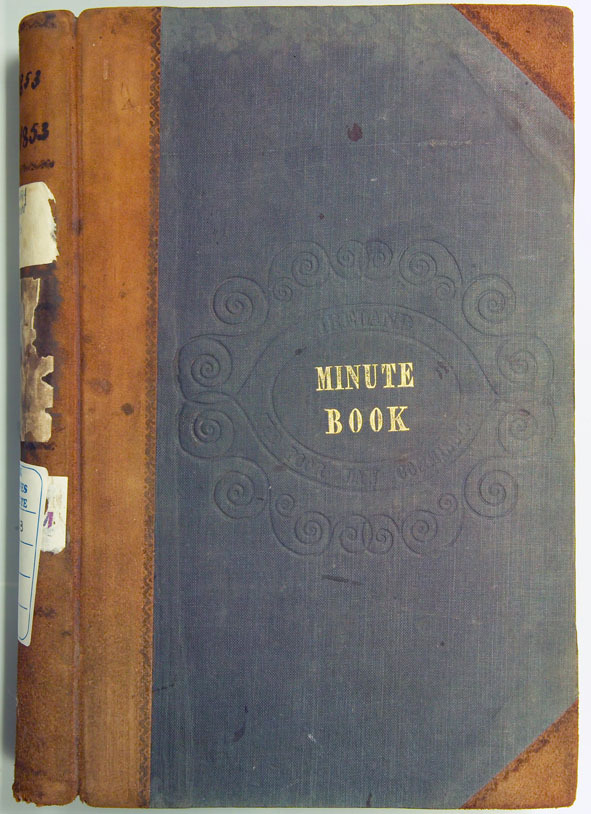
Scope and ContentThe surviving records of Dunmanway Board of Guardians consist of minute books, forming a practically unbroken set from its first meeting in 1840 to 1920, although minutes for the final years of its existence have seemingly been lost. The minutes for the period of the Great Famine (1845-49) document its devastating effects on this part of West Cork. The West Cork region was one of the worst effected in Ireland, and although the Famine’s impact was less severe in Dunmanway union than in others, the minutes provide a vivid picture of the hardships of the time. Death, disease, emigration, and the financial difficulties of the union and the local population are the recurrent subjects. The minutes also document the relationship between the various West Cork Unions, and the rearrangements which occurred in 1849-50, as Clonakilty Union and other unions came into being.
Later records document the increasing public health role of the board of guardians, with dispensary committees of management being created, dispensary services being provided throughout the union area, and services such as compulsory smallpox vaccination and local midwives being provided. Much information about the conditions of workhouse life, and of life for the poor of the area generally, may be gleaned from the minutes. The British Medical Journal report of 1895(referred to in the Administrative History) reveals the grim realities of maintaining workhouse and hospital services on severely limited means. There is much reference in later minutes to providing for destitute and deserted children. Political and nationalist resolutions occur more frequently in the final surviving records of the union, culminating in the decision to pledge allegiance to Dail Eireann in 1920. The difficulties arising out of the occupation of much of the workhouse by British military from 1920 probably contributed to the loss of some union records. Nonetheless, the extant volumes, with the three pre-1920 gaps in the main series filled by rough minute books, provide a comprehensive record of the poor law, and valuable insights into social history, in this small but interesting union.
Later records document the increasing public health role of the board of guardians, with dispensary committees of management being created, dispensary services being provided throughout the union area, and services such as compulsory smallpox vaccination and local midwives being provided. Much information about the conditions of workhouse life, and of life for the poor of the area generally, may be gleaned from the minutes. The British Medical Journal report of 1895(referred to in the Administrative History) reveals the grim realities of maintaining workhouse and hospital services on severely limited means. There is much reference in later minutes to providing for destitute and deserted children. Political and nationalist resolutions occur more frequently in the final surviving records of the union, culminating in the decision to pledge allegiance to Dail Eireann in 1920. The difficulties arising out of the occupation of much of the workhouse by British military from 1920 probably contributed to the loss of some union records. Nonetheless, the extant volumes, with the three pre-1920 gaps in the main series filled by rough minute books, provide a comprehensive record of the poor law, and valuable insights into social history, in this small but interesting union.
Extent108 volumes
Persons keywordDunmanway Board of Guardians
SubjectLocal Government and Health
AccessHard copies: Accessible to Readers by appointment. Access restrictions apply to some collections. Digital object/copy: see Download Media and/or Digital Reference
RightsLicensing information available on request by email to archivist@corkcity.ie Copyright Cork City and County Archives, Cork City Council, unless otherwise indicated. All Rights Reserved.
Levelfonds
RepositoryCork City and County Archives
Download media
Hierarchy browser